Names of Trials You Have to Know for Cardiology Rotation
Clinical Rotations
Clinical grooming takes place primarily at the new, state-of-the-art Van Ness Campus (video tour) of CPMC (opened three/2019) that is a third referral center for Sutter Wellness equally well as for Northern California, providing avant-garde cardiac intendance including complex coronary intervention, structural centre intervention, cardiac electrophysiology, and advanced eye failure and middle transplantation. All acute cardiac services were moved from the Pacific Campus of CPMC, the site of the original Cooper Medical College (established 1890) and Stanford Academy Schoolhouse of Medicine (1909-1959). Two months are also spent at the newMission Bernal Campus (video tour) of CPMC (opened viii/2018) in the Mission commune of San Francisco that serves an underserved patient population also as houses the Acute Care for the Elderly (ACE) unit of measurement for older adults. This new campus was congenital to replace St. Luke's Hospital (established 1871), one of the original hospitals in San Francisco.
Our 9 cardiology fellows (3 per year) are integral members of the cardiovascular services and laboratories, and piece of work side-by-side with core faculty and attention cardiologists in every aspect of the cardiovascular segmentation. All fellows likewise participate in monthly institutional cardiovascular process improvement meetings every bit members of specific workgroups. While gaining exceptional clinical grooming, fellows as well accept an active role in supervising and instruction interns and residents from the CPMC Internal Medicine Residency program, besides as medical students from Geisel School of Medicine at Dartmouth and UCSF.
Clinical rotations are distributed over 3 years with cadre rotations (required past ACGME/COCATS) concentrated in the first ii years. This allows for more time in Twelvemonth iii to customize training using months reserved for constituent rotations , whether information technology be for advanced fellowships preparation, advanced COCATS achievements, or other specific career goals. The more condensed rotation schedule during the first yr also allows full exposure to the breath of cardiology so that fellows can brand a determination for sub-specialization early.
| Rotation | Twelvemonth 1 | Year 2 | Year 3 |
|---|---|---|---|
| Consultative Cardiology | ii | i | one |
| Mission Bernal Campus Cardiology | 1 | one | |
| CCU / Telemetry Service | 1 | 2 | one |
| Advanced Heart Failure / Transplant Service | one | one | 2 |
| Electrophysiology Service | 1 | i | |
| Cardiac Catheterization Laboratory | two | 1 | 1 |
| Echocardiography Laboratory | two | 2 | |
| Noninvasive Cardiology Laboratory | * | * | * |
| Nuclear Cardiology Laboratory | 1 | 1 | |
| Structural Heart / Cardiac Surgery | i | 1 | |
| Advanced Cardiac Imaging | 1 | ||
| Adult Built Heart Affliction | ** | ** | ** |
| Ambulatory Cardiology | *** | *** | *** |
| Elective / Research | 1 | 1 | 5 |
| Total (Months) | 12 | 12 | 12 |
* Biweekly coverage schedule throughout year
** Dedicated curriculum during Echocardiography rotation
*** Weekly ½ mean solar day at assigned office throughout year
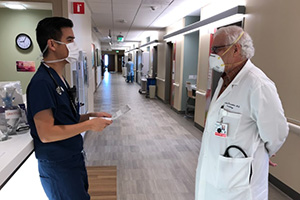
Consultative Cardiology
The cardiology inpatient consult rotation represents the foundation of clinical preparation at this programme that aims to train infrequent clinical cardiologists. As a tertiary referral center for the Sutter Health system and for all of Northern California, CPMC receives the almost complex referrals and transfers, and fellows on the consult rotation take a high-quality consultative experience. The fellow works directly with the attending cardiologists assigned to the inpatient service for the week, and together with the attendings, manages a broad assortment of clinical pathologies on the general medicine and surgical wards, on the obstetrics floor, and in the intensive care units. Common consultation topics including management of astute coronary syndrome, arrhythmias, heart failure, pre-operative cardiac evaluations, and mail-operative cardiac management. Consult service census ranges from 10-20 patients per day.
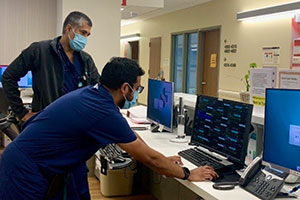
Mission Bernal Campus Cardiology
Ii months are dedicated to managing the cardiology service at the Mission Bernal Campus of CPMC. This campus is located 12 minutes directly south of the Van Ness Campus in the Mission and Bernal Heights districts of San Francisco and serves a more underserved patient population. Consequently, clinical pathologies such as rheumatic center disease, infectious endocarditis, and peripartum cardiomyopathy are seen at higher frequency during this rotation. The fellow provides direct cardiology consultative services and coordinates patient intendance with the emergency department and hospitalist services equally the main cardiologist. Daily rounds accept identify with the kinesthesia cardiologist to discuss direction decisions. The fellow also runs the weekly discharge clinic where patients are seen post-obit belch from the infirmary for continuity of care.
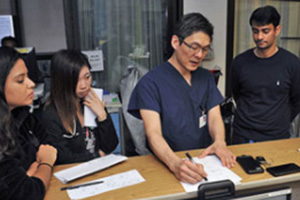
Coronary Care Unit / Telemetry Service
There are two inpatient cardiology teams that make up the cardiology service at the Van Ness Campus of CPMC. Each team is staffed by one of the ii cardiology practices, Sutter Foundation Cardiology and Gilt Gate Cardiology, and has a dedicated internal medicine resident, intern and medical students. Critical cardiac patients are cared for in whatsoever of the beds in the open ICU that make upwards the entire 6th floor of the medical heart. All other cardiac patients are cared for in any of the private rooms on the 9th and 10th floors that are enabled for telemetry monitoring and staffed with specialized cardiac nursing. The fellow on this rotation functions as a junior attending, and supervises both teams, coordinating work rounds with the weekly attending from each group, and analogous patient care with other services such as avant-garde centre failure, interventional and structural heart, electrophysiology, cardiothoracic surgery, and advanced cardiac imaging. The fellow is also responsible for housestaff and student teaching.
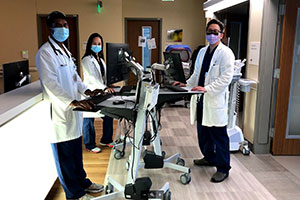
Advanced Eye Failure / Transplant Service
Because of the wealth of clinical feel on this service, and at the asking of fellows, the program has extended the eye failure rotation from ii months (required by COCATS) to 4 months. There has been a long history of cardiac transplantation and LVAD innovation at this institution, and the Center for Advanced Centre Failure Therapies and Transplants at CPMC continues to exist one of the highest volume services at CPMC, drawing referrals and transfers of end-phase centre failure and astute cardiogenic shock from Sutter affiliates and hospitals throughout the region. The young man is an agile member on a multidisciplinary team that includes avant-garde middle failure cardiology, transplant surgery, structural heart, critical care, and the in-house NP squad. While on service, the young man is responsible for a defended list of patients, drives discussions on these patients during rounds, and straight manages care with the nurse practitioners. Fellows gain experience in the entire spectrum of mechanically-assisted circulatory support, including IABP, Impella and ECMO, equally well equally gain exposure to postoperative LVAD and transplant care. Fellows also participate in selection committees for LVAD and heart transplantation.
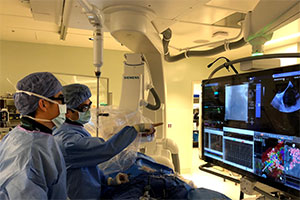
Electrophysiology Service
Fellows experience arrhythmia direction throughout their clinical training, participating in the evaluation and treatment of atrial fibrillation, eye block, SVT, VT, cardiac arrest, as well every bit pacemaker and ICD management. The Electrophysiology Service rotation provides a more intensive experience in advanced cardiac electrophysiology, managing the inpatient EP service also as participating in the EP laboratory. The Atrial Fibrillation and Complex Arrhythmia Center at CPMC is a referral center for high-acuity and loftier-complexity cases from across Northern California. Fellows are able to experience the entire range of EP studies, complex catheter-based interventions including epicardial ventricular tachycardia ablations, every bit well as pacemaker and ICD implantation and extractions. There are no electrophysiology subspecialty fellows, allowing cardiology fellows to gain unrivaled experience in the EP laboratory. For fellows interested in advancing to electrophysiology fellowship, case volume and hands-on interest in specialized laboratory skills such every bit coronary sinus cannulation and transseptal puncture have been advantageous attributes. Even if fellows are not planning to pursue an electrophysiology fellowship, the plan offers COCATS Level II achievement with optional preparation in pacemaker implantation (this volition require dedicating some other four months of elective fourth dimension to pacemaker and ICD direction and implantation).
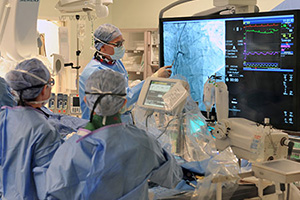
Cardiac Catheterization Laboratory
Iv dedicated months allow for concentrated time in the cardiac catheterization laboratory to gain proficiency in correct and left heart catheterization, hemodynamic interpretation, coronary angiography and valvular assessment. There are no interventional cardiology subspecialty fellows, allowing cardiology fellows to exist kickoff-assist in nearly any example. For fellows interested in advancing to interventional and structural fellowship, case volume and hands-on involvement, not just in coronary interventions, just also in structural heart cases have been advantages during the subspecialty fellowship application procedure. Additional experience in the catheterization laboratory is gained during the Structural Heart rotation (see below). Due to the high volume of catheterization laboratory cases at the Van Ness Campus at CPMC, most fellows, even if they are not planning to pursue additional fellowship training in interventional cardiology, will accomplish COCATS Level II that will allow them to perform procedures in the catheterization laboratory in one case they are in practice.
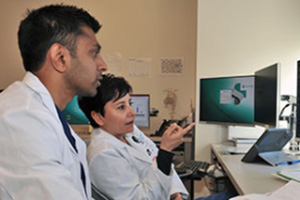
Echocardiography Laboratory
Four dedicated months in the echocardiography laboratory allow fellows to master skills in performing and interpreting transthoracic and transesophageal echocardiography, and proceeds proficiency in managing developed congenital heart disease. Fellows average xv-20 transthoracic interpretations per mean solar day and perform 3-v transesophageal echocardiograms per 24-hour interval. Fellows nourish a ½ day adult congenital middle illness clinic that manages a large population of patients with built heart disease cared for at CPMC for over 50 years. Fellows actively participate in the management of a wide diverseness of conditions including ASD, VSD, Tetralogy of Fallot, and partial anomalous pulmonary venous return. CPMC is an active center of the Bay Expanse Adult Built Society, and our fellows present cases at the society conference biennially. With the high-volume of cases, all fellows hands achieve COCATS Level II in echocardiography, and develop a thorough understanding of physiologic and hemodynamic principles of transthoracic, transesophageal, dissimilarity, 3-dimensional, and speckled tracking strain echocardiography. During rotations in the cardiac catheterization and EP laboratories, fellows as well gain feel in intracardiac echocardiography. For fellows interested in advanced echocardiography preparation, there is a curriculum that includes experience in intraprocedural and intraoperative transesophageal echocardiography during structural intervention and cardiac surgery, and fellows are able to achieve COCATS Level III by dedicating an additional iii-vi months of constituent time to advanced echocardiography.
Non-Invasive Cardiology Laboratory
Fellows become comprehensive exposure to the not-invasive cardiology laboratory at the Van Ness Campus and are trained to become proficient in supervising and reading the full spectrum of non-invasive testing such as Holter monitoring, event monitoring, treadmill stress testing, and tilt-tabular array testing.
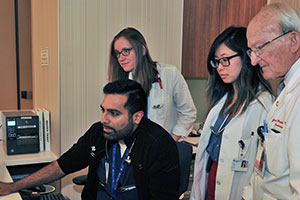
Nuclear Cardiology Laboratory / Advanced Cardiac Imaging
During the dedicated nuclear cardiology rotation, fellows gain concentrated experience in the operations of the nuclear cardiology laboratory, and as well have dedicated time for in-depth nuclear report reading. During the advanced cardiac imaging rotation, fellows spend structured time with our advanced cardiac imaging radiologist and read nuclear studies, structural CTs, coronary CTs, coronary calcium scans and cardiac MRIs. As a referral middle for avant-garde cardiomyopathies, patients are routinely transferred to CPMC for evaluation and management of conditions such every bit cardiac amyloidosis, cardiac sarcoidosis, and arrhythmogenic right ventricular cardiomyopathy, and fellows receive training in nuclear cardiology and cardiac imaging twelvemonth round while on other rotations such every bit consultative cardiology, CCU and advanced heart failure. The multidisciplinary conferences are attended by cardiac radiology, and detailed and high-level discussions ensue among fellows and faculty while viewing and interpreting high-definition images on the briefing room projector screen.
Structural Middle / Cardiac Surgery
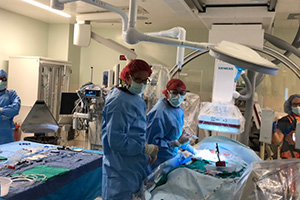
The newly redesigned structural middle and cardiovascular surgery rotation provides a dedicated calendar month during each of the second and third years of a cutting-border feel in valvular disease management. In this new era of transcatheter valvular therapeutics, cardiologists finishing training must exist good in understanding and applying the newest concepts and therapies available. Bay Area Structural Eye at CPMC is a premier structural heart program that is involved in multiple clinical trials and has access to procedures and devices that identify the program truly at the leading edge of this rapidly evolving field. Fellows are able to participate in transcatheter cases including TAVR, TMVR, TTVR, MitraClip, ASD closure, and WATCHMAN left atrial appendage closure, and assist with intraprocedural transesophageal structural imaging.
Adult Built Heart Disease
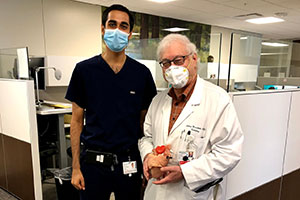
Intendance of adult patients with congenital heart affliction occurs over multiple rotations. In add-on to providing straight patient care, there is a yearlong lecture series given past Stanford Developed Congenital Centre specialists. Our weekly adult built heart dispensary, run in conjunction with other local Adult Congenital specialists, allows fellows to manage a wide diversity of disorders. There is robust participation in the Bay Area Adult Congenital Lodge with biannual instance presentations by the fellows.
Ambulatory Cardiology
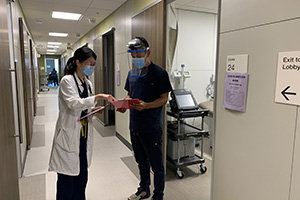
The convalescent cardiology curriculum involves fellows managing a panel of patients directly in the offices of the core kinesthesia. Each year, each boyfriend is assigned to a kinesthesia cardiologist, and will go to their office ½ a day per week to run across new outpatient consultations and see these patients in follow-upward throughout that yr. Patients are typically seen by the fellows start, then are seen with the fellow and the attending doc together. Past being in an bodily cardiology part setting, fellows also learn to interact and piece of work with office staff and other clinical providers such equally medical translators, nurses, nurse practitioners, and physician assistants. The yearly assignment process starts with the fellow submitting their choices of offices. With available subspecialty kinesthesia, fellows are able to gain deeper experience in subspecialties within cardiology if interested, such as in interventional cardiology, structural middle affliction, electrophysiology, or advanced heart failure. With different offices to choose from, fellows can besides be exposed to different practise models, ranging from smaller individual, to foundation, to academy-affiliated practices. This in-depth exposure to the workings of cardiology offices has provided fellows important insight during the job search procedure.
Elective / Research
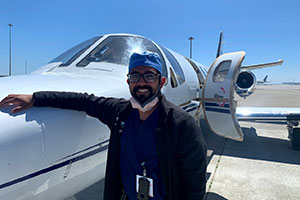
During semiannual performance evaluation sessions with the plan director, fellows will actively discuss and plan how to utilize constituent months. For each elective month, a rotation objective with specific learning goals will be submitted to the plan managing director for approval. Electives are utilized co-ordinate to the preparation objectives of each fellow, and may include time directed toward achievements of COCATS Level II in cath lab, EP lab, pacemaker implantation, vascular medicine, nuclear cardiology, cardiac CT, cardiac MR, or COCATS Level 3 in echocardiography. Electives tin can also be structured for research, preparation for avant-garde fellowship, rotations at outside institutions, and for other specific career goals.
Quick Links
Source: https://www.suttermd.com/education/fellowship/cpmc-cardiology/clinical-rotations
0 Response to "Names of Trials You Have to Know for Cardiology Rotation"
Post a Comment